Custodial vs non-custodial wallets: who really holds your crypto?
With a custodial account a company holds the keys and you trust it. With self-custody you hold the keys and carry the responsibility. Here is what changes, risk by risk.
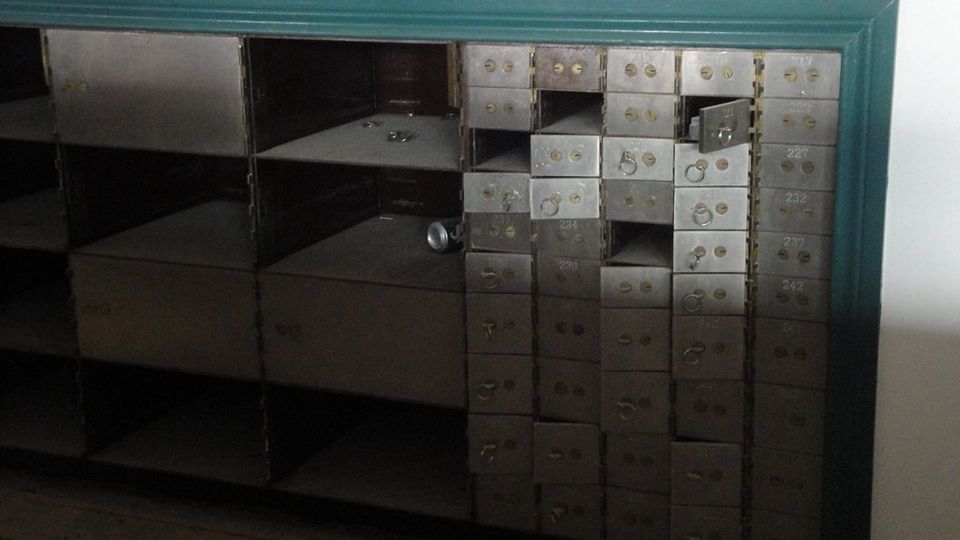
Photo: “Safe Deposit Boxes” by noahjeppson, CC BY-SA 2.0, via Flickr (edited: cropped and resized).
A custodial wallet means a company, such as an exchange, holds the private keys and you rely on it to honour withdrawals [1]. A non-custodial (self-custody) wallet means you hold the keys yourself: no company stands in the way, but nobody can restore a lost recovery phrase [1].
Key points
- 1Whoever controls the private keys controls the coins. Custody is simply the question of who that is.
- 2Custodial accounts add counterparty risk: the company’s security, solvency and policies sit between you and your funds.
- 3Self-custody removes that middleman but makes you responsible for backups. A lost recovery phrase cannot be reset.
- 4Crypto held with a company is not covered by bank-style deposit insurance in the US, according to the SEC’s investor office.
- 5Many people use both: a custodial account to buy and sell, and a self-custody wallet for what they keep.
On this page
- What does “custody” mean in crypto?
- How does a custodial account work?
- What protection applies to crypto held with an EU platform?
- How does self-custody work?
- Which risks does each choice carry?
- What does a split look like in practice?
- How do you secure a custodial account?
- How do you make self-custody safe enough?
- Is moving coins between the two risky?
- What mistakes do beginners make here?
- Frequently asked questions
- The bottom line
- Sources
What does “custody” mean in crypto?#
A crypto wallet is, at its core, a collection of private keys — secret numbers that prove you are allowed to spend the coins linked to an address [2]. An account is a pair of keys: a public key used to create the address you share, and a private key you keep secret because it is used to sign transactions [3]. If you are new to these terms, start with public keys, private keys and addresses.
Custody is the question of who holds those private keys. If an exchange or app holds them for you, the arrangement is custodial. If you hold them yourself, it is non-custodial, usually called self-custody. Both terms describe the same thing; you will see them used interchangeably.
Two ways to hold crypto


How does a custodial account work?#
When you buy crypto on a centralised exchange, the exchange links your account to a username and password that can be recovered in a traditional way — but you are trusting that exchange with custody of your funds, and if it has financial trouble your funds are at risk [3]. The balance you see on screen is the company’s record of what it owes you, not coins under your own keys. NIST, the US standards agency, noted in 2018 that instead of storing keys themselves, users may turn to an emerging industry of private key escrow services, which can also satisfy know-your-customer (KYC) laws because users must prove their identity when creating an account [4].
Bitcoin.org calls this counterparty risk: when you leave coins with a custodian, its security, solvency and policies stand between you and your money [1]. The SEC’s investor education office warns that people who deposit crypto with a platform might cease to have legal ownership of those assets, that some platforms have suspended withdrawals, and that some have entered bankruptcy with unclear recovery for customers [5].
Crypto accounts are also not backed by a government. The US Federal Trade Commission notes that crypto held in accounts is not insured the way dollars in an FDIC-insured bank are, so if the company storing your crypto goes out of business or is hacked, the government has no obligation to help you get it back [6]. In the EU, financial supervisors add that several exchanges and wallet providers have suffered cyber-attacks and severe operational problems [7].
What protection applies to crypto held with an EU platform?#
In 2022, EU financial supervisors warned consumers of a lack of recourse or protection, because crypto-assets and related services typically fell outside existing EU financial services rules [7]. Since then the EU’s Markets in Crypto-Assets Regulation (MiCA) entered into force in June 2023 and has applied in full since December 2024 [8]. It sets uniform EU market rules for crypto-assets [8]. Its provisions cover transparency, disclosure, authorisation and supervision [8], and it lays down specific rules for firms that provide crypto-asset services, including custody and administration of crypto-assets on behalf of clients [9].
The practical step for a beginner is checking authorisation. ESMA, the EU’s markets supervisor, publishes a register of authorised crypto-asset service providers, together with a list of non-compliant entities [8]. MiCA let member states allow firms already operating under national law before 30 December 2024 to continue until 1 July 2026, or until their MiCA authorisation was granted or refused [8]. ESMA noted that the mix of regimes during this transition may result in different levels of protection for consumers [8].
How does self-custody work?#
In self-custody, a wallet app or device generates your keys. The wallet provider does not hold your funds; it gives you a window to see your assets and tools to manage them, and you can switch to a different wallet app at any time [3]. When you create the wallet, it usually shows a recovery phrase (also called a seed phrase) that you must write down — it is the only way to recover the wallet [3]. Our guide to seed phrases explains how those words become keys.
The flip side is that there is no undo button. If you permanently lose access — for example by losing the recovery phrase — nobody, including developers, miners, wallet providers or exchanges, can recover the funds from a self-custodied wallet [1]. Theft is just as final: NIST notes that whoever steals a private key gains full access to all the digital assets it controls [4]. The threats also move to your own devices: a wallet that keeps keys on an internet-connected phone or computer is exposed if that device is compromised [10], which is why some people keep savings on a hardware wallet or other offline setup.
Which risks does each choice carry?#
| What goes wrong | Custodial account | Self-custody wallet |
|---|---|---|
| The company fails or pauses withdrawals | Funds can be stuck or lost [5] | Not affected: no company holds the keys |
| The platform is hacked | Customer assets can be lost [7] | Not affected by the platform; your own device is the target |
| You forget your password | Usually recoverable through the company [3] | Wallet password: very limited recovery options [11] |
| You lose your recovery phrase | Not applicable | Funds lost permanently if you also lose access to the wallet [1] |
| Someone obtains your recovery phrase | Not applicable | They can access every account in the wallet [12] |
| You send to the wrong address | Usually irreversible | Irreversible [12] |
Neither column is risk-free. Choosing one is choosing which risks you would rather manage.
What does a split look like in practice?#
Bitcoin.org suggests treating a phone or computer wallet like cash in your pocket: keep only small amounts there for everyday use and the rest in a safer environment [11]. A worked example shows why that matters.
| Step | Value |
|---|---|
| Set-up A: everything left on one exchange | $2,000 |
| Exposed if that exchange fails or freezes | $2,000 (100%) |
| Set-up B: spending wallet on a phone | $150 (7.5%) |
| Set-up B: savings in an offline, self-custody wallet | $1,850 (92.5%) |
| Exposed in set-up B if the phone is hacked | $150 (7.5%) |
Set-up B adds a different duty: the savings wallet’s recovery phrase must be backed up well, because nobody can reset it. Neither set-up protects against price falls; it only changes who can lose or block your coins.
How do you secure a custodial account?#
- Check who you are dealing with
EU supervisors suggest asking whether the firm is reputable and whether national authorities have blacklisted it — while noting that not being blacklisted is no guarantee of safety [7].
- Use a unique, strong password
A password manager can create and store a long, unique password for each account [12].
- Turn on app-based two-factor authentication
SMS codes are open to SIM jacking; an authenticator app or a physical security key is stronger [12]. The FBI’s IC3 logged 982 SIM-swap complaints with $25,983,946 in losses in 2024 [13].
- Bookmark the real website
Typing or searching for the site each time makes it easier to land on a look-alike phishing page; a bookmark avoids that [3].
- Never share codes or keys
No legitimate support agent will ask for your password, two-factor codes or recovery phrase [12].
How do you make self-custody safe enough?#
- Write the recovery phrase on paper
Do not store it on a computer [3], and do not screenshot it — screenshots can sync to cloud storage [12].
- Keep more than one copy, in more than one place
A backup that does not depend on a single location is less likely to be lost in a single event [11].
- Keep savings offline
Offline (cold) storage gives strong protection against computer vulnerabilities when done properly [11]. See cold wallet.
- Keep software up to date
Updates deliver security fixes for the wallet and for the device it runs on [11].
- Plan for your family
If nobody knows where your wallets or backups are, the funds may never be recovered when you are gone [11].
Is moving coins between the two risky?#
Moving coins from an exchange to your own wallet is a normal on-chain transfer, so the usual rules apply: transactions cannot be reversed, and you should check that the receiving address exactly matches the one you intend [12]. A sensible habit is to copy the address from your own wallet app, then compare it character by character before confirming. If you are moving a large amount, you can send a small amount first and check that it arrives before sending the rest. Moving coins between platforms also involves network fees; see transaction fees explained.
Custody facts to remember
- Bank-style insurance on crypto platform accounts (US)
- None — SIPC and FDIC do not apply [5]
- EU crypto-asset rules (MiCA) entered into force
- June 2023 [8]
- Who can recover a lost self-custody recovery phrase
- Nobody [1]
- Recovery phrase length (BIP39 standard)
- 12 to 24 words [14]
- SIM-swap losses reported to IC3 in 2024
- $25,983,946 [13]
What mistakes do beginners make here?#
- Thinking an exchange balance is the same as owning coins
On a custodial platform your balance is a claim on the company. If it fails, you may queue with other creditors.
- Treating self-custody as automatically safer
Self-custody removes company risk but adds backup risk. A phrase stored in a photo or an email can be stolen; a phrase you lose cannot be replaced.
- Relying on SMS codes for two-factor login
SMS codes can be hijacked through SIM swapping. Use an authenticator app or a security key where the platform supports it.
- Keeping one copy of the recovery phrase
Fire, water or a house move can destroy a single sheet of paper. Keep more than one copy in separate safe places.
Frequently asked questions#
Is an exchange account a wallet?
Exchanges often call it a wallet, but it is a custodial account: the exchange holds the keys and you hold a login. You can only move the coins if the exchange processes your withdrawal.
Which is safer, custodial or non-custodial?
Neither is safe in every situation. Custodial accounts add company risk; self-custody adds the risk of losing or leaking your recovery phrase. The right mix depends on how much you hold and how confident you are with backups.
If my wallet app company shuts down, do I lose my crypto?
Not in self-custody. Wallet providers do not hold your funds, and you can restore your accounts in another compatible wallet using your recovery phrase [3].
Is crypto on an exchange insured like a bank deposit?
In the US, no. The SEC’s investor office says there are no SIPC or FDIC-type protections for accounts placed with crypto asset firms [5]. Read any platform’s own terms carefully rather than assuming your balance is protected.
How do I check whether an exchange is authorised in the EU?
Can someone help me if I lose my self-custody recovery phrase?
Only if you still have access to the wallet and can make a new backup. If both the phrase and the wallet are gone, nobody can recover the funds — and anyone offering to do so for a fee should be treated with suspicion.
The bottom line#
Custodial versus non-custodial is not a question of which is good and which is bad. It is a choice about whom you trust: a company to stay solvent, honest and secure, or yourself to keep a recovery phrase safe for years.
If you decide to hold some coins yourself, the next step is understanding the backup you are responsible for — read seed phrases explained — and the scams that target both kinds of account in common crypto scams.
Sources#
Grade A = primary source (regulator, protocol specification, client code, original author). Grade B = expert secondary source used for explanation only.
- ABitcoin.org. Some things you need to know, 2026.
- BBitcoin Wiki. Wallet, 2026.
- Aethereum.org. Ethereum wallets, 2026.
- AU.S. National Institute of Standards and Technology. NISTIR 8202: Blockchain Technology Overview, 2018. Section 3.4.1, Private Key Storage
- AU.S. SEC Office of Investor Education and Advocacy (Investor.gov). Exercise Caution with Crypto Asset Securities: Investor Alert, 2023.
- AU.S. Federal Trade Commission. What To Know About Cryptocurrency and Scams, 2022.
- AEuropean Supervisory Authorities (EBA, ESMA, EIOPA). EU financial regulators warn consumers on the risks of crypto-assets, 2022.
- AEuropean Securities and Markets Authority (ESMA). Markets in Crypto-Assets Regulation (MiCA), 2026.
- AOfficial Journal of the European Union. Regulation (EU) 2023/1114 on markets in crypto-assets (MiCA), 2023.
- Abitcoin.org developer documentation. Wallets (Developer Guide), 2026.
- ABitcoin.org. Securing your wallet, 2026.
- Aethereum.org. Ethereum security and scam prevention, 2026.
- AFBI Internet Crime Complaint Center. 2024 IC3 Annual Report.
- ABitcoin Improvement Proposals (GitHub). BIP 39: Mnemonic code for generating deterministic keys, 2013.
Keep reading
What is a seed phrase? How 12 or 24 words protect a whole wallet
A seed phrase is the master backup of a self-custody wallet. Here is how the words are made, why they are so hard to guess, and why they are so easy to lose to a scammer.
How hardware wallets work: keeping keys offline while you spend
A hardware wallet is a small device whose only job is to hold private keys and sign transactions. Here is the workflow, the checks that make it useful, and the gaps it leaves open.
CEX vs DEX: how centralized and decentralized crypto exchanges differ
A centralized exchange is a company that holds your funds and matches orders for you. A decentralized exchange is a set of smart contracts you trade against from your own wallet. Each removes some risks and adds others.