What are stablecoins? How “digital dollars” work and where they can fail
A stablecoin is a crypto token that tries to stay worth a fixed amount, usually one US dollar. Here is how that promise is built, who stands behind it, and why “stable” is a goal rather than a guarantee.
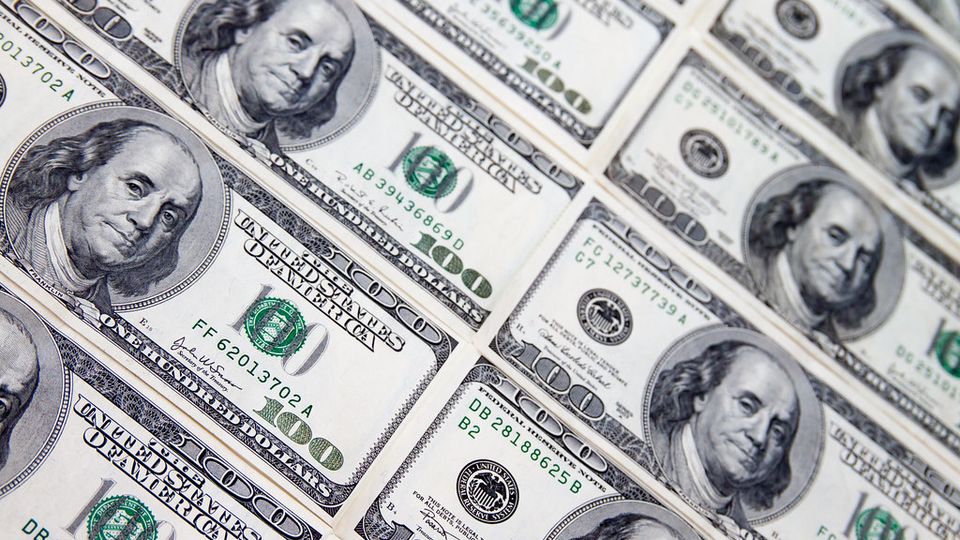
Photo: “Money” by Ervins Strauhmanis, CC BY 2.0, via Flickr (edited: cropped and resized).
A stablecoin is a crypto token designed to hold a stable value against a reference asset, usually the US dollar [1]. Some are backed by cash-like reserves held by a company, others by crypto locked in smart contracts, some by algorithms — and each can lose its peg differently [2].
Key points
- 1Stablecoins aim for a fixed value, usually $1, but their market price can and does move away from that target.
- 2There are three broad designs: fiat-backed (off-chain reserves), crypto-collateralized (on-chain collateral) and algorithmic (little or no collateral).
- 3A stablecoin is a claim on whoever issues it, not a bank deposit; deposit insurance generally does not pass through to holders.
- 4For fiat-backed coins, redemption at par is usually open only to approved business customers; ordinary users buy and sell on exchanges.
- 5Rules differ by country: the EU’s MiCA regulation requires issuers of single-currency tokens to offer redemption at par [3], and the US GENIUS Act of 2025 requires permitted issuers, once it takes effect, to hold reserves of at least 1 to 1 in listed liquid assets [4].
On this page
- What is a stablecoin, in one paragraph?
- Why do people use stablecoins?
- What types of stablecoins exist?
- How is a stablecoin created and redeemed?
- Is a stablecoin the same as a dollar in the bank?
- How big is the stablecoin market?
- How are stablecoins regulated?
- What can go wrong with a stablecoin?
- What mistakes do beginners make here?
- Frequently asked questions
- The bottom line
- Sources
What is a stablecoin, in one paragraph?#
Most crypto-assets, such as bitcoin or ether, have prices that rise and fall freely. A stablecoin is a token built to do the opposite: to keep a steady value relative to something outside crypto, called the reference asset — typically the US dollar [2]. US regulators describe stablecoins as digital assets “designed to maintain a stable value relative to a national currency or other reference assets” [1]. ethereum.org puts it simply: stablecoins are tokens “designed to stay at a fixed value, even when the price of ETH changes” [5].
The important word is designed. The design — what backs the token and who promises to swap it back for dollars — decides how well the target holds. That design is called the stabilization mechanism, and it differs a lot from one stablecoin to the next [2].
Why do people use stablecoins?#
Inside crypto markets, stablecoins act as the cash leg of trades. A Federal Reserve note reported that more than 80% of trade volume on major centralized crypto exchanges involved a stablecoin as one side of the trading pair [2]. The US Treasury’s 2021 interagency report found that stablecoins were then used in the United States mainly to trade, lend and borrow other digital assets [1].
- Parking value between trades without converting back to a bank account.
- Moving dollars between platforms quickly, wallet to wallet, regardless of banking hours or public holidays [6].
- Collateral and borrowing in DeFi lending and as one side of many pools on decentralized exchanges.
- Cross-border payments, especially in countries where access to dollars is limited — a use the Bank for International Settlements (BIS) notes alongside serious concerns [6].
What types of stablecoins exist?#
Regulators and researchers group stablecoins by what stands behind them. The Federal Reserve uses three categories: off-chain collateralized, on-chain collateralized and uncollateralized, also called algorithmic [2]. A later Fed note uses the friendlier names fiat-backed, crypto-collateralized and algorithmic [7].
| Design | What backs it | Examples named by the Fed | Typical weak point |
|---|---|---|---|
| Fiat-backed (off-chain) | Bank deposits, Treasury bills and other cash-like assets held by a company | Tether (USDT), USD Coin (USDC) | Trust in the issuer, its reserves and its bank or custodian |
| Crypto-collateralized (on-chain) | Crypto locked in smart contracts, usually more than $1 of collateral per $1 issued | Liquity USD (LUSD), Dollar on Chain (DoC) | Collateral prices can fall fast, forcing liquidations |
| Algorithmic (uncollateralized) | Rules that expand or shrink supply; few or no reserve assets | Decentralized USD (USDD), Terra Classic USD (USTC) | Works only while people believe in it; prone to “death spirals” |
Categories and examples from the Federal Reserve’s 2022 note. Some coins mix designs; the Fed calls these hybrids.
Fiat-backed coins dominate. The BIS says the fiat-backed variant “accounts for the lion’s share of the market” [6]. Algorithmic coins have proved the most fragile group: the collapse of TerraUSD in May 2022 sent the market value of uncollateralized stablecoins back to 2021 levels [2]. Our guide to how stablecoins keep their peg walks through each mechanism step by step.
How is a stablecoin created and redeemed?#
New stablecoins are minted when someone hands the issuer an asset — dollars for a fiat-backed coin, crypto for a crypto-backed one. When coins are returned for redemption, they are burned (removed from circulation) and the underlying asset is paid back [2].
Life cycle of a fiat-backed stablecoin


Here is the catch for beginners: the mint-and-redeem window is usually not open to you. Circle says its Mint service lets exchanges, institutional traders and banks redeem USDC 1:1 for dollars, and that it “is not available to individuals or small businesses” [8]. Fed researchers note that fiat-backed issuers tend to mint and burn only with institutional customers, so retail users rely on secondary markets such as exchanges [7].
| Step | Value |
|---|---|
| Value if you sell now = 1,000 × $0.97 | $970 |
| Shortfall versus the $1 target | $30 |
| Value if you could redeem at par = 1,000 × $1.00 | $1,000 |
| Can a typical individual redeem directly? | Often not — only approved customers |
Arbitrage by approved customers is what normally pulls the price back toward $1. If they cannot or will not redeem, a dip can last.
Is a stablecoin the same as a dollar in the bank?#
No. A bank deposit is a claim on an insured bank. A stablecoin is a claim — if it is a claim at all — on a private issuer. The Treasury report points out that redemption rights vary widely: some issuers may postpone redemptions for seven days or suspend them at any time, and some coins give users no direct redemption right at all [1].
The BIS adds a further difference. Bank money always trades at par, but stablecoins carry the name of their issuer — like “red dollars” and “blue dollars” — and trade at exchange rates that can drift from $1. It argues this means stablecoins fail what it calls the test of singleness of money [6].
How big is the stablecoin market?#
Large, and concentrated in a few US-dollar coins. DefiLlama’s stablecoin data, retrieved on 3 October 2026 at 04:56 UTC, counted 340 US-dollar-pegged stablecoins with a combined circulating supply of about $312.8 billion [9]. In that snapshot, Tether (USDT) accounted for about 58.8% of the total and USD Coin (USDC) for about 23.7% — our calculation from the same data [9]. For comparison over time, the Treasury report cited stablecoin supply rising from $21.5 billion on 19 October 2020 to $127.9 billion on 18 October 2021, an increase of about 495% [1]. A market-cap table on ethereum.org, retrieved on 3 October 2026, listed USDT at about $184 billion and USDC at about $74 billion [5]; Circle reported $75.2 billion of USDC in circulation as of 24 September 2026 [8]. Figures differ between sources, partly because they are taken at different moments and count different coins.
Stablecoins in numbers
- US-dollar stablecoin supply, 3 October 2026 (DefiLlama)
- ≈ $312.8 billion across 340 coins [9]
- Share denominated in US dollars
- Over 99% [6]
- Supply, October 2021
- $127.9 billion [1]
- Trade volume on major centralized exchanges involving a stablecoin
- Over 80% [2]
- USDC reserve pledge
- Redeemable 1:1 for US dollars (approved customers) [8]
How are stablecoins regulated?#
It depends on where you are. Both the European Union and the United States now have laws with specific rules for stablecoins. In the European Union, the Markets in Crypto-Assets Regulation (MiCA) splits stable-value tokens into e-money tokens, which reference a single official currency, and asset-referenced tokens, which reference other values or rights, or a combination such as several currencies [3]. Issuers of e-money tokens must be authorised as credit institutions (banks) or electronic money institutions, and holders must be able to redeem “at any time and at par value” [3].
What does the US GENIUS Act require?#
In the United States, stablecoins now have their own federal law. The GENIUS Act (Guiding and Establishing National Innovation for U.S. Stablecoins Act), Public Law 119-27, was approved on 18 July 2025 [4], and the White House announced the signing that day [10]. Before it, a 2021 interagency report had urged Congress to require payment-stablecoin issuers to be insured depository institutions [1]; the Act instead allows three kinds of issuer, listed below [4].
The law covers payment stablecoins: digital assets used, or designed to be used, for payment or settlement, whose issuer is obligated to redeem them for a fixed amount of money and says it will keep a stable value (Section 2) [4]. National currencies, bank deposits and securities are excluded from that definition (Section 2) [4].
| Section | What it says |
|---|---|
| Sec. 3(a) | Only a permitted payment stablecoin issuer may issue a payment stablecoin in the United States [4]. |
| Sec. 2(23) | Permitted issuers are formed in the US and are an approved subsidiary of an insured depository institution, a federal qualified issuer or a state qualified issuer [4]. |
| Sec. 4(c) | A state qualified issuer with no more than $10 billion outstanding may opt for a state regime that is substantially similar to the federal one [4]. |
| Sec. 4(a)(1)(A) | Reserves of at least 1 to 1, in listed assets such as US dollars, deposits at insured institutions, Treasury bills, notes or bonds with a maturity of 93 days or less, certain overnight repos and government money market funds holding such assets [4]. |
| Sec. 4(a)(2) | Reserves may not be pledged, rehypothecated or reused, except in narrow cases such as meeting redemptions [4]. |
| Sec. 4(a)(1)(B) | A public redemption policy with clear procedures for timely redemption, and all fees disclosed; fees can change only with at least 7 days’ notice [4]. |
| Sec. 4(a)(1)(C), 4(a)(3) | Reserve composition published every month, examined each month by a registered public accounting firm and certified by the CEO and CFO [4]. |
| Sec. 4(a)(11) | No interest or yield paid to holders solely for holding, using or keeping the stablecoin [4]. |
| Sec. 11 | If a permitted issuer becomes insolvent, holders’ claims on the required reserves come before other creditors’ claims [4]. |
A selection of sections, summarised by us. The full Act also covers foreign issuers, anti-money-laundering duties, custody and more.
When does it apply? Section 20 says the Act takes effect on the earlier of two dates: 18 months after enactment, or 120 days after the main federal regulators issue final rules to implement it [4]. Counting from 18 July 2025, 18 months is 18 January 2027 (our arithmetic). Section 13 told regulators to issue those rules within 1 year of enactment [4]; our sources do not show whether final rules have been issued, so we cannot confirm whether the Act is already in force. Separately, from 3 years after enactment — 18 July 2028 by our count — digital asset service providers may not offer or sell a payment stablecoin to people in the United States unless a permitted issuer issued it, with some exceptions (Section 3(b)) [4].
Elsewhere, the BIS notes that the EU, Japan and Singapore require issuers to obtain authorisation and set up local entities [6]. Rules differ by country, so check what applies where you live before relying on any protection.
What can go wrong with a stablecoin?#
- Losing the peg. In March 2023, Circle said $3.3 billion of USDC reserves (out of around $40 billion) was stuck at Silicon Valley Bank; USDC and DAI fell to under 90 cents on secondary markets before recovering over about three days [7].
- Runs. If holders doubt the issuer can pay, they rush to redeem first — the same dynamic as a run on an uninsured bank [2].
- Frozen balances. The BIS notes that, working with blockchain analytics firms, stablecoin issuers can block or freeze funds in cases of known infractions [6] — so a balance you hold is not beyond the issuer’s reach.
- No undo button. A payment sent to the wrong address or a lost private key means the funds are, in the BIS’s word, “irretrievable” [6].
- General crypto risks. EU supervisors warn of scams, fraud and cyber attacks, and that you are unlikely to have any rights to protection or compensation if things go wrong [11].
What mistakes do beginners make here?#
- Treating a stablecoin as an insured bank balance
It is a claim on a private issuer. Deposit insurance generally covers the issuer’s bank account, not you.
- Assuming you can always redeem for $1
Direct redemption is usually limited to approved business customers. Ordinary users sell on exchanges at whatever the market price is.
- Lumping all stablecoins together
A fiat-backed coin, a crypto-backed coin and an algorithmic coin fail in very different ways. Check the design before you hold one.
- Reading size as safety
USDC and DAI were among the four largest stablecoins when both fell below 90 cents in March 2023 [7]. Size and reputation did not prevent the de-peg.
- Chasing the highest stablecoin interest rate
Interest on a stablecoin comes from lending or other strategies, each with its own risks. EU supervisors tell consumers to be particularly wary of promised high returns [11].
Frequently asked questions#
Are stablecoins a good place to keep savings?
We do not give personal advice. Stablecoins carry issuer, custody, technical and regulatory risks that a bank deposit does not, and EU supervisors warn that crypto holders are unlikely to have any rights to protection or compensation if things go wrong [11].
Who decides the price of a stablecoin?
The market does. Issuers promise redemption at par to their customers, but the price you see is set by trading on exchanges, which can deviate from $1 [7].
Are there stablecoins pegged to things other than the dollar?
Is a stablecoin the same as a central bank digital currency?
No. A stablecoin is issued by a private company or a protocol. A central bank digital currency would be issued by a central bank; Circle itself draws this distinction [8].
Can a stablecoin go to zero?
Yes. TerraUSD, an algorithmic design, collapsed in May 2022, and the Fed describes how that collapse reverberated throughout the digital asset ecosystem [2].
Does the GENIUS Act remove the risks of holding US stablecoins?
No. It sets reserve, disclosure and redemption-policy rules for permitted issuers, and it also states that payment stablecoins are not covered by federal deposit insurance [4]. Prices can still move, platforms can fail and coins from other issuers fall outside those rules. This is general education, not legal advice.
The bottom line#
A stablecoin is a promise, not a property of the token. How strong that promise is depends on what backs it, who can redeem it, and how much people trust the issuer when markets are stressed. Most of the time the big dollar coins trade close to $1; history shows that “most of the time” is not “always”.
Next, see the mechanics in detail in how stablecoins keep their peg, or learn how stablecoins power decentralized exchanges.
Sources#
Grade A = primary source (regulator, protocol specification, client code, original author). Grade B = expert secondary source used for explanation only.
- AU.S. Department of the Treasury — President’s Working Group on Financial Markets, FDIC and OCC. Report on Stablecoins (interagency report), 2021.
- ABoard of Governors of the Federal Reserve System. The stable in stablecoins (FEDS Notes), 2022.
- AOfficial Journal of the European Union (EUR-Lex). Regulation (EU) 2023/1114 on markets in crypto-assets (MiCA), 2023.
- AU.S. Congress (U.S. Government Publishing Office). Public Law 119-27: Guiding and Establishing National Innovation for U.S. Stablecoins Act (GENIUS Act), 2025.
- Aethereum.org. Stablecoins explained: What are they for?, 2026.
- ABank for International Settlements. Annual Economic Report 2025, Chapter III: The next-generation monetary and financial system, 2025.
- ABoard of Governors of the Federal Reserve System. Primary and Secondary Markets for Stablecoins (FEDS Notes), 2024.
- ACircle. USDC, 2026. Issuer’s own page; used for its stated terms and circulation figure.
- BDefiLlama (API data, summarised by TokenTrail). Stablecoins data: circulating supply of USD-pegged stablecoins, 2026. Snapshot retrieved 3 October 2026, 04:56 UTC.
- AThe White House. Fact Sheet: President Donald J. Trump Signs GENIUS Act into Law, 2025. Used only for the signing date; the law text is the primary source for its requirements.
- AEuropean Supervisory Authorities (EBA, ESMA, EIOPA). EU financial regulators warn consumers on the risks of crypto-assets, 2022.
Keep reading

How do stablecoins keep their peg? Arbitrage, collateral and confidence
No stablecoin is held at $1 by a law of nature. Each one relies on a mechanism that gives traders a reason to push the price back — and each mechanism has a point where that reason disappears.

How decentralized exchanges work: pools, prices and the x × y = k rule
A decentralized exchange lets you swap tokens straight from your own wallet. Instead of matching buyers with sellers, most use a pool of tokens and a formula. Here is what that formula does to the price you get.

How DeFi lending works: collateral, the health factor and liquidations
DeFi lending replaces the loan officer with a smart contract and the credit check with collateral. That makes borrowing open to anyone — and makes liquidation automatic when prices move against you.